
How to Clean a Lawn Like a Pro in 2026
Cleaning a lawn properly means more than running a mower over the grass and calling it done. A truly clean yard involves removing leaves, picking up fallen branches, clearing clutter, managing thatch, and tidying the edges where the lawn meets paths, driveways, and garden beds. The good news is that how to clean a lawn is a straightforward skill anyone can learn, and the payoff shows up quickly in thicker grass, fewer weeds, and a yard that looks cared for from the street to the back fence.
Yet many homeowners make the job harder than it needs to be. They rake too aggressively, cut the grass too short during cleanup, or leave a layer of debris that suffocates the turf over winter. This practical lawn care guide keeps things simple. You will learn the exact order of work, which tools actually help, and which common habits you should drop in 2026. Whether you have a small patch behind a townhouse or a large rural lot, the same core principles apply.
If you remember one thing, remember this: a thorough cleaning routine should protect the soil and the grass roots, not just clear the surface. That single idea will guide every choice you make below.
💡 Key Takeaways
- Work in the Right Order: Remove large debris first, then mow, then rake leaves so you never push trash back onto fresh turf.
- Keep the Cutter High: A moderate cutting height protects grass crowns and keeps the lawn dense through every cleanup.
- Recycle What You Can: Mulched leaves and grass clippings return nutrients to the soil and cut down on yard waste.
- Tackle Thatch in Stages: Light scarifying twice a year beats one deep, damaging raking session in a single weekend.
- Finish with Neat Edges: A crisp border instantly upgrades the appearance of even an ordinary lawn.
What Does Cleaning a Lawn Actually Mean?
A clean lawn is not the same as a mowed lawn. Mowing shortens the grass blades, while cleaning is a deeper reset that removes everything preventing the turf from breathing. That includes fallen leaves, twigs, acorns, pet waste, moss, thatch, matted patches, and the clutter that collects along fences and garden beds.
For most homes, a full clean happens in three layers. The first layer is surface debris, which you can see and pick up easily. The second layer sits at the base of the grass, where clippings and leaves form a mat. The third layer is below the surface, where compacted soil and thatch quietly choke the roots. Key lawn cleaning concepts involve all three, not just the visible mess on top.
In 2026, more gardeners are taking a balanced approach. You do not need to strip the yard bare. Leaving some organic matter is actually good for the soil, as long as it does not form a thick, wet blanket over the grass crowns. The goal is a lawn that can breathe, absorb water, and recover quickly after every cleanup session.
Why a Cleaner Yard Looks Better and Grows Better
The clearest reason to clean your lawn is appearance. A yard free of leaves, sticks, and stray debris simply looks more polished. But the real benefits go deeper than looks. When sunlight reaches the lower parts of the grass plants, the turf grows denser and fills in bare spots on its own.
Airflow matters just as much. Heavy layers of wet leaves trap moisture against the blades, which encourages fungal diseases like red thread and snow mold. Removing that moisture trap keeps the grass healthier and reduces the need for chemical treatments later.
A cleaner lawn also makes every future task easier. The mower glides over smooth ground, the edger hits clean lines, and you spend far less time fighting tangled, matted grass. Once you understand how to clean a lawn properly, the weekly mowing itself becomes faster and more pleasant.
The Right Order for a Full Lawn Cleanup
The secret to professional-looking results is sequencing. If you rake leaves before picking up branches, you only have to do the job twice. If you mow before removing large debris, you risk damaging your mower blades. Follow this proven order for a smooth, efficient session:
- Clear Large Debris First: Walk the yard and remove branches, toys, stones, and other objects that could damage your tools or dull the mower blades.
- Mow at a Normal Height: Cut the grass at your usual setting. Avoid scalping it short, since long grass is easier to rake and less stressful to the turf.
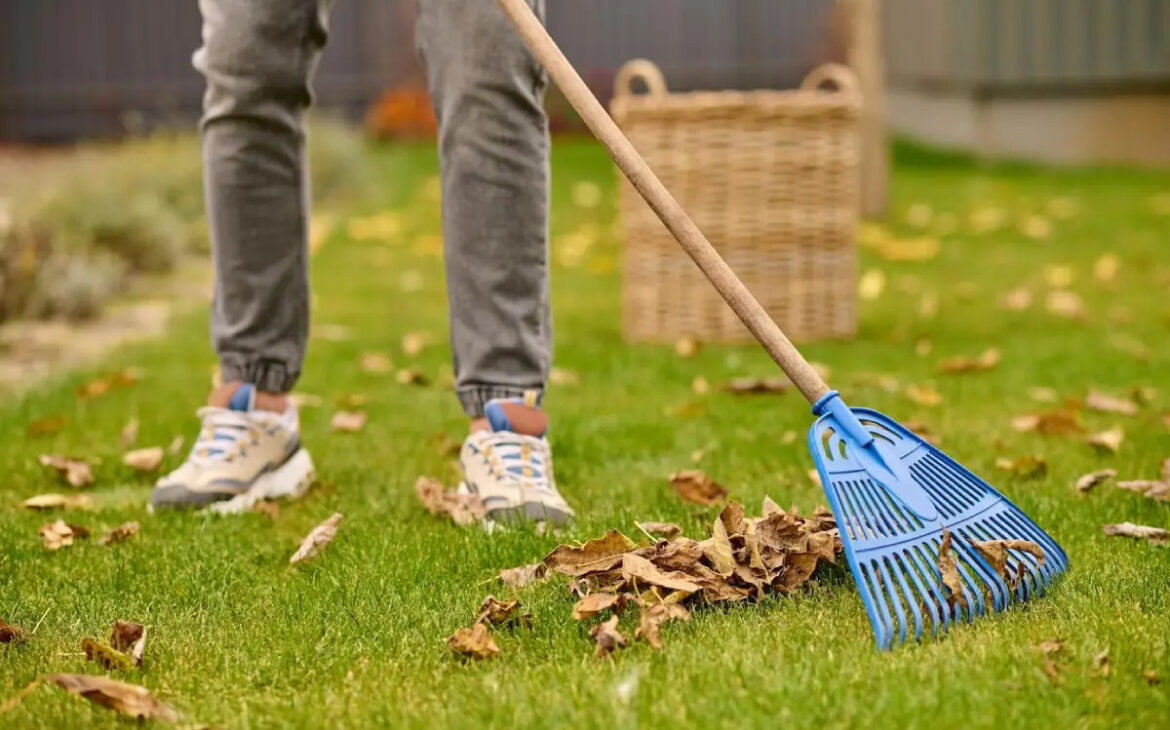
- Rake or Blow Leaves into Rows: Work with a leaf rake or a blower to gather leaves into manageable piles rather than scattering them across the whole yard.
- Remove Thick Clippings: If the mower left heavy clumps of grass, rake them up so they do not smother the turf underneath.
- Scarify Lightly When Needed: Use a spring-tine rake to lift thatch and moss from the base of the grass without tearing up healthy roots.
- Edge the Borders: Cut a clean line along paths, driveways, and garden beds so the lawn has a sharp, finished boundary.
- Blow the Hard Surfaces: Clear grass clippings and dirt off driveways and sidewalks so the whole outdoor space looks tidy.
- Inspect and Water In: Walk the yard once more, spot-check for missed debris, and water lightly if the soil is dry.
Following this sequence keeps the work efficient and prevents common setbacks. Many first-timers are surprised by how much time they save simply by removing large objects before they touch any other tool.
Leaves and Grass Clippings: Recycle or Remove?
One of the biggest decisions in any cleanup is what to do with the organic material you collect. Leaves and grass clippings are not waste. They are full of nutrients that your lawn can reuse, so the smartest approach depends on the amount and condition of what you are dealing with.
When Mulching Is the Better Choice
If the leaf layer is thin and dry, run over it with a mulching mower. The blades chop the leaves into tiny pieces that fall between the grass blades and break down quickly. This returns nitrogen and organic matter to the soil, reduces landfill waste, and saves you hours of raking.
Mulching works best when you mow regularly during fall. For dry leaves, a single pass usually does the job. If the leaves are thick, you may need to mow over them twice or make a second pass in a different direction.
When Bagging Makes Sense
There are times when bagging is the right call. Wet, heavy leaves form a sticky mat that a mower cannot shred properly. Lawns with a history of fungal disease benefit from removing infected clippings. If you maintain a compost pile, bagged leaves and clippings become excellent compost material for flower beds.
🚀 Pro Tip
Mow leaves when they are completely dry and set the mower deck one notch higher than usual. Dry leaves shred more easily, and a higher deck reduces the chance of cutting the grass too short in the same pass.
Thatch, Moss, and the Layer You Cannot See
Thatch is the layer of dead stems, roots, and organic matter that builds up between the soil and the green grass blades. A thin layer of thatch is harmless and even helpful, but anything thicker than about half an inch acts like a roof. It blocks water, air, and fertilizer from reaching the roots.
Moss is a different problem. It usually appears where the grass is struggling, often in shady, damp, or compacted areas. Raking moss out without fixing the underlying conditions means it will simply return. Improving drainage and letting in more light are the long-term solutions.
Learning how to clean a lawn without damaging it comes down to thatch management. Use a spring-tine rake or a powered scarifier over the affected areas, and always rake in one direction before switching to another. If the thatch layer is severe, spread the work across two or three sessions rather than ripping everything out at once.
⚠️ Important Notice
Do not scalp your lawn while raking or scarifying. If you see bare soil between the grass plants, you have gone too deep. Healthy turf has plenty of green growth left after a gentle cleanup.
Edging and Borders: The Finishing Touch
People often forget that how to clean a lawn includes the edges. A yard can be perfectly raked, yet still look messy if grass is creeping over the driveway or spilling into the flower beds. A crisp edge defines the boundary and instantly makes everything look neater.
Use a half-moon edger or a powered string trimmer along hard surfaces. For beds and borders, cut a shallow V-shaped groove that separates the lawn from the soil. This small groove also stops creeping grass and weeds from invading your garden beds over the following weeks.
The best time to edge is right after mowing, when the lawn is dry and the grass blades stand upright. Edging on wet ground produces a ragged line and makes the soil muddy. With practice, a straight edge takes only a few minutes and makes the entire yard look professionally maintained.
Seasonal Lawn Cleaning: How Spring and Fall Differ
Your approach to how to clean a lawn should shift with the seasons. Spring and fall are the two big cleanup windows, but the work in each season is different.
Spring cleaning focuses on recovery. Rake away any matted grass and leftover leaves from winter, remove debris knocked down by storms, and lightly scarify compacted areas. This is also the best time to spot-fill bare patches and apply a balanced fertilizer before the main growing season begins.
Fall cleaning is heavier. The yard collects more leaves, and the final mow of the year leaves clippings that need attention. Clear leaves regularly so they do not form a wet mat over winter, remove thatch while the grass is still growing, and tidy the edges before the ground hardens. A clean lawn entering winter recovers faster in spring.
Common Lawn Cleaning Mistakes to Avoid
Even experienced gardeners make mistakes during the annual clean. The good news is that most problems are easy to avoid once you know what to watch for. Here are the most common ones:
- Cutting the Grass Too Short: Low mowing weakens the roots and invites weeds. Keep the cutting height moderate for your grass type.
- Raking Too Aggressively: Pulling hard on a spring-tine rake pulls out healthy grass along with the thatch. Use gentle, even strokes.
- Leaving Piles of Leaves Overnight: Leaf piles trap moisture and kill the grass underneath. Remove or spread them the same day.
- Ignoring the Edges: Skipping borders leaves the whole lawn looking untidy, no matter how clean the center is.
- Working on Wet Grass: Wet turf tears easily, and wet leaves are too heavy to rake or mulch effectively. Wait for a dry day.
- Bagging Everything: Removing every clipping starves the soil of free nutrients. Recycle leaves and clippings whenever conditions allow.
If you recognize any of these habits in your own routine, fix them one at a time. Small changes in technique often produce bigger improvements than buying more equipment.
Tools That Make Lawn Cleaning Easier
You do not need a shed full of machinery to clean a lawn well, but the right tool for each task saves time and protects your grass. Here is a quick overview of the most useful equipment categories and when each one earns its place:
For small yards, basic hand tools are more than enough. For larger properties, a leaf blower and a powered scarifier dramatically reduce the physical effort. The right choice comes down to lawn size, personal fitness, and how much time you want to spend on the job.
📊 Lawn Cleanup Performance & Recovery Index
94%
89%
92%
86%
📊 How to Clean a Lawn Like a Pro in 2026 Performance & Evaluation Index
93%
88%
90%
Frequently Asked Questions
Should I rake leaves or mow them into the lawn?
For thin, dry leaf layers, mulching with a mulching lawn mower is faster and healthier for the soil. The shredded leaves break down and feed the grass. Rake or bag when the leaves are thick, wet, or heavily matted, since a heavy layer will smother the turf and block light and air.
How often should I do a full lawn cleanup?
Most lawns need one thorough cleanup in early spring and another in mid-fall. During the growing season, a light weekly tidy keeps things manageable. A quick pass with a blower to clear debris, clippings, and leaves prevents buildup before it becomes a bigger job.
Is it better to leave grass clippings on the lawn or bag them?
Leaving clippings is better for the lawn in most cases. Clippings return nitrogen and moisture to the soil, reducing the need for fertilizer. Bag them when the clippings are so thick they form clumps, or when the grass shows signs of disease and you want to remove infected material.
What is the best time of year to remove thatch?
Early spring and early fall are ideal because the grass is actively growing and can recover quickly. Avoid heavy dethatching in summer heat or late fall, when recovery is slow. For mild thatch, a simple spring-tine rake is enough; severe buildup may require a powered scarifier.
How do I clean a lawn that has moss growing in it?
Rake out the moss first, then address the reason it grew. Moss thrives in shade, damp soil, and compacted ground. Improve drainage, raise the mower height, and prune nearby trees to let in more light. Without these changes, moss will keep returning no matter how well you clean.
Final Thoughts
Learning how to clean a lawn like a pro does not require expensive equipment or endless hours of work. It requires the right sequence, a gentle touch, and a little patience. Start with the surface debris, manage leaves and clippings wisely, resist the urge to rake too hard, and finish with crisp edges.
The best next step is simple: pick one day this week and complete a single cleanup pass using the order outlined above. Once you see how the turf responds, you will have your own rhythm for every season. A clean lawn is not just about appearances. It is one of the easiest ways to build a healthy, resilient yard that looks great all year long.