

Keeping a yard looking its best involves much more than running the mower, yet most homeowners only start thinking about how to clean a lawn safely after they have already seen the damage. Aggressive raking, early spring cleanup on soggy ground, and repeated foot traffic can pull up grass roots, compact the soil, and leave the yard full of thinning patches. The good news is that removing leaves, twigs, thatch, and matted winter grass is perfectly safe when you use the right tools, wait for the right conditions, and work with a light touch.
This article covers the complete grass-safe approach to how to clean a lawn. You will learn which season is best for a full cleanup, what actually needs to be removed, which tools protect your turf, and how to turn a routine chore into a habit that leaves your lawn healthier than before.
💡 Key Takeaways
- Timing Matters Most: Clean when the grass is dry and actively growing so it can recover quickly from any stress.
- Lift, Don’t Scrape: Use long, light raking strokes that lift debris without cutting into the soil surface.
- Choose Flexible Tines: A quality leaf rake gathers leaves far more safely than a sharp steel garden rake.
- Check Thatch First: Only dethatch when the thatch layer is thicker than about half an inch.
- Spare the Wet Lawn: Stay off waterlogged grass and postpone cleanup until the soil firms up.
Why Lawn Cleaning Goes Wrong So Often
Most lawn damage during a cleanup is not caused by the debris itself. It is caused by how the debris is removed. Every grass plant has a crown near the soil surface, and that crown produces all new growth. When a rake catches the crown, pulls it upward, or scrapes across the soil around it, the plant weakens and often pulls out of the ground completely.
Grass roots are also shallow. In many lawns they sit just two to four inches below the surface, and in wet soil they dislodge very easily. That is why a spring lawn cleanup performed on soggy turf can leave more bare patches than it cures. Repeatedly walking on a wet lawn while dragging piles of leaves increases soil compaction, which reduces oxygen around the roots and slowly thins the grass over time.
Understanding these basics changes how you approach the job. A healthy lawn care routine treats cleaning as a surface-level task. If your rake comes up with soil, if you see deep rake marks, or if you are pulling green stems along with the leaves, you are cleaning too aggressively. Slow down, lighten the pressure, and let the debris come to you.
What Actually Needs Cleaning (and What Doesn’t)
Not everything that lands on your lawn needs to be removed. A thin scattering of leaves, for example, can be shredded in place with a mulching lawn mower, and those leaf fragments feed the soil. The same applies to short grass clippings left after mowing. They break down quickly, return nitrogen to the roots, and make a separate cleanup completely unnecessary.
⚠️ Important Notice
Never remove every grass clipping just to “keep the lawn clean.” Clippings return nitrogen and moisture to the soil. Bagging them every week slowly starves the lawn and increases the amount of fertilizer you will need later.
The problem appears when debris forms a thick, wet mat. A heavy layer blocks sunlight, traps humidity against the grass, and invites fungal disease. Dense piles of leaves, fallen twigs, acorns, and pine needles should always be collected, especially before winter, when snow can press them into a suffocating blanket.
Thatch is a different matter entirely. The thatch layer is the collection of dead stems and runners sitting between the green grass and the soil. A thin layer protects the crown, so you only need to dethatch when it grows thicker than about half an inch. The same logic applies to matted winter grass: gently loosen flattened dead blades so new shoots can push through, but never scratch down into the living plant beneath them.
The Best Time of Year for Lawn Cleanup
Timing can decide whether your cleanup helps the turf or harms it. The simple rule is to clean when grass is actively growing and to stay away when the soil is wet, frozen, or extremely dry.
Early spring is the riskiest season for heavy cleaning. Once the snow melts, the ground is often waterlogged and soft. A lawn that squishes underfoot should be left alone entirely. Wait until the turf dries out and growth begins, then tackle thatch and matted patches.
Late spring and early summer are good windows for dethatching if the thatch is genuinely thick, because fast growth speeds up recovery. Fall is the best time for the main cleanup of the year. Temperatures are mild, growth is still steady, and clearing leaves before winter protects the lawn from smothering. In late fall, stop deep raking once the ground hardens, because frozen grass is brittle and snaps easily.
⚠️ Important Notice
If the lawn squishes when you walk on it, postpone the cleanup. Working on waterlogged soil compacts the ground and tears out crowns, and the damage can last for the entire season.
Step-by-Step: A Grass-Safe Cleanup Routine
Follow this sequence every time you clean the yard. It removes the debris while keeping roots and crowns completely undisturbed.
- Test the ground first. Take a few steps on the lawn and look behind you. If your footprints fill with water, wait two or three dry days. The grass must be firm enough to support your weight before any cleaning begins.
- Start with light debris. Use a blower set to low speed to move loose leaves into rows or onto a tarp. On the lawn itself, full power can blast soil and small roots out of the surface, so keep the pressure gentle and the nozzle angled upward.
- Rake with a sweeping motion. Choose a leaf rake with flexible tines and use long, light strokes that skim the surface. Imagine you are sweeping a carpet, not scraping paint. Lift the leaves and let the tines glide over the grass.
- Handle thatch separately. If the thatch layer is thicker than half an inch, pull a dethatching rake gently upward. Take short passes and stop when you see bare soil between the grass stems.
- Move piles off the lawn. Rake debris onto a tarp instead of dragging piles across the grass. Tug the tarp carefully toward your compost area. Never leave piles sitting on the lawn overnight.
- Finish with a recovery step. If the forecast is dry, water the lawn deeply. Let the grass grow normally for a few days before mowing, and avoid heavy foot traffic on the freshly cleaned areas.
🚀 Pro Tip
Set your leaf rake at a wider angle and let the tines glide over the surface. If you see soil or broken grass in your pile, you are pushing too hard. Ease up, shorten your strokes, and let the leaves come to you.
Which Cleaning Tools Are Actually Safe for Your Grass?
The right tool makes the job easier and safer. The wrong tool, even in careful hands, can slice through runners and open up the soil. Here is how common options compare when your priority is grass damage prevention.
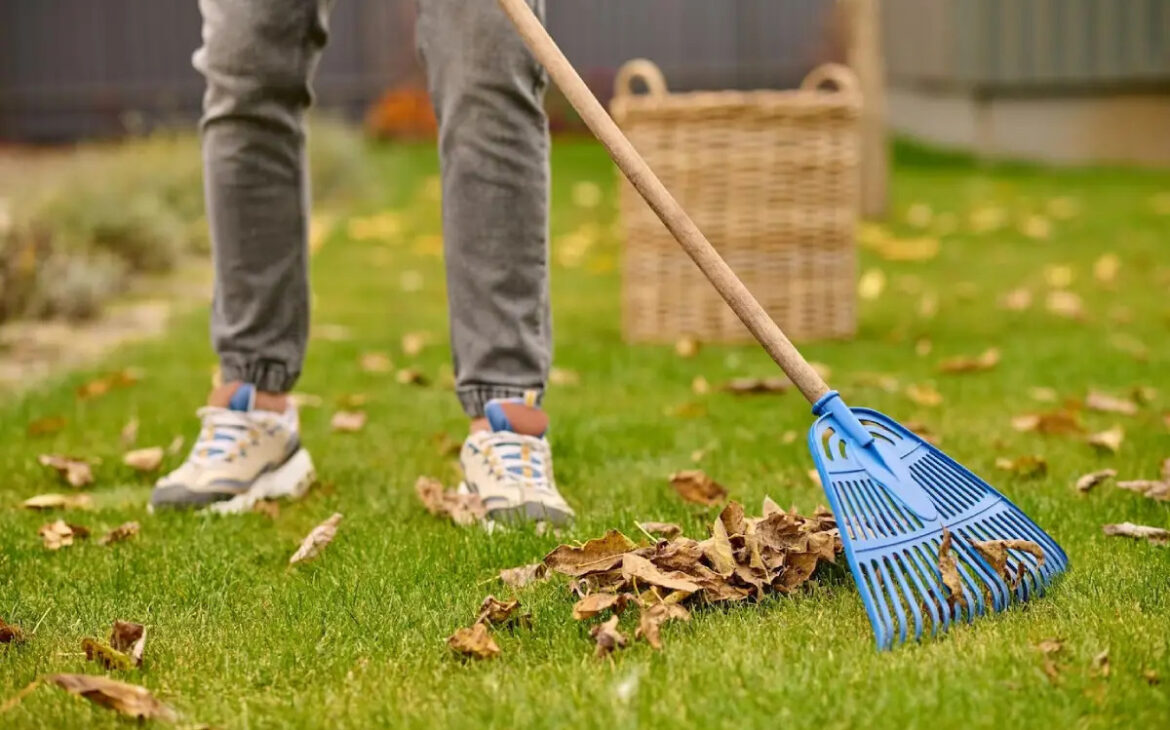
- Flexible-tine leaf rake: The safest all-around choice for clearing leaves and light debris. The springy tines bend over bumps and grass crowns instead of digging into them.
- Leaf blower on low speed: Excellent for hard surfaces and for moving light leaves across turf. Keep the speed low whenever the nozzle is directly over grass.
- Dethatching rake: A specialty tool with short, curved tines made for lifting thatch. Use it sparingly and only when the thatch layer is clearly too thick.
- Lawn sweeper or broom rake: A very gentle, mechanical option for large, fairly flat lawns. It collects debris without tugging at the crown.
- Mulching lawn mower: The best tool during leaf season. It shreds fall leaves into tiny pieces that return nutrients to the soil while saving you hours of raking.
- Tools to keep off the lawn: Steel garden rakes, wire rakes, and hard metal tines belong in flower beds and gravel paths. On a lawn they carve grooves that expose the root system.
🚀 Pro Tip
During autumn, mow over fallen leaves a second time before collecting them. The shorter the leaf pieces, the faster they break down and the less work your cleanup routine after mowing will need to do.
Comparing Grass-Safe Cleaning Methods
The table below summarizes the most common cleaning methods, their level of risk to the turf, and the best season to use each one. Use it as a quick reference before you start working.
Common Mistakes That Hurt Grass During Cleaning
These mistakes show up in almost every yard, and they are the reason so many people blame a simple cleanup for damaged turf. Avoid them and you will avoid most problems.
- Raking with too much pressure: The rake should lift debris, not scrape the earth. Deep strokes damage the crown and leave visible furrows that dry out the roots.
- Cleaning while the lawn is wet: Wet roots come out of the ground easily. One cleanup on soggy ground can undo weeks of healthy growth.
- Removing every leaf and clipping: Organic material feeds the lawn. Removing everything slowly makes the soil poorer and increases your dependence on fertilizer.
- Dethatching every year: Healthy lawns rarely need dethatching. Doing it annually weakens the crown, opens the lawn to weeds, and removes beneficial organic matter.
- Dragging heavy piles across the grass: A wet tarp loaded with leaves can crush turf and compact soil, leaving a visible trail. Slide it along a hard path instead.
- Walking the same path repeatedly: Repetitive foot traffic, even in dry conditions, compresses the soil and creates a worn-looking corridor through the yard.
88%
91%
85%
