What Happens When You Never Clean a Vacuum Filter
What Happens When You Never Clean a Vacuum Filter impacts way more than just your cleaning routine—it can wreck your vacuum’s performance, spread harmful allergens through your home, and even drive up your energy bills. This guide breaks down every hidden consequence of skipping filter maintenance, plus simple steps to fix the problem fast.
We’ve all been there: you run your vacuum over a sticky cereal spill three times, but the crumbs stay stuck to the floor. Or you turn the machine on to clean up after your dog, and a cloud of dust puffs out of the vent instead of getting sucked up. Most people assume their vacuum is broken, or that they need to buy a new one. But 9 times out of 10, the real problem is a dirty, neglected filter.
Today, we’re breaking down exactly what happens when you never clean a vacuum filter—no vague warnings, no sales pitches, just clear, practical info you can use to save your vacuum, your health, and your wallet. Whether you have a cordless stick vacuum, a heavy upright, or a robot vac, this guide applies to every type of machine in your home.
Key Takeaways
- Severe suction loss: A clogged filter blocks airflow, making your vacuum work twice as hard to pick up even small crumbs, and often leaving dirt behind on floors.
- Allergen and dust spread: A dirty filter can’t trap particles, so it blows dust, pet dander, and pollen back into your home’s air, worsening allergies and asthma.
- Motor overheating and damage: Restricted airflow forces your vacuum’s motor to overwork, leading to premature burnout and costly repair or replacement bills.
- Higher energy costs: A struggling vacuum draws more power to run, adding unnecessary dollars to your monthly utility bills over time.
- Voided manufacturer warranties: Most vacuum brands require regular filter maintenance to keep warranty coverage valid, so skipping cleaning can leave you paying for repairs out of pocket.
- Unpleasant home odors: Trapped dirt, hair, and moisture in a dirty filter breed bacteria and mold, making your vacuum blow musty, foul smells every time you turn it on.
📑 Table of Contents
- How a Dirty Vacuum Filter Ruins Suction (and Makes Cleaning Take Twice as Long)
- The Hidden Health Risks of Never Cleaning Your Vacuum Filter
- What Happens When You Never Clean a Vacuum Filter: Motor Damage and Shortened Lifespan
- The Sneaky Extra Costs of a Dirty Vacuum Filter
- How Often Should You Clean Your Vacuum Filter? (And How to Do It Right)
- Common Mistakes People Make When Cleaning Vacuum Filters
- Conclusion
How a Dirty Vacuum Filter Ruins Suction (and Makes Cleaning Take Twice as Long)
First, let’s cover the most obvious problem: your vacuum stops picking up dirt. You might not realize it at first—you run the vacuum over a spot once, assume the crumbs are gone, then notice them again later. But over time, you’ll find yourself running the vacuum over the same area 3 or 4 times, and it still leaves dirt behind.
Why Airflow Matters for Vacuum Performance
Vacuums work by creating suction: they pull air in through the floor nozzle, send that air (and the dirt it’s carrying) through the filter, then push the clean air out through a vent. The filter’s only job is to trap dirt and dust so it doesn’t get blown back into your home. But when that filter gets clogged with hair, dirt, and debris, it blocks the airflow.
Even a small clog can reduce your vacuum suction by 50% or more. A fully clogged filter can cut suction by 90%, which means your vacuum is barely picking up anything at all. You’re wasting time, wasting energy, and still ending up with dirty floors.
Signs Your Filter Is Already Clogging Your Suction
Not sure if your filter is the problem? Look for these telltale signs:
- Your vacuum leaves dirt, crumbs, or pet hair behind after multiple passes over the same spot.
- The machine sounds louder than usual, or makes a high-pitched whining noise.
- Air is blowing out of the vent instead of getting sucked in through the nozzle.
- Your vacuum shuts off randomly while you’re using it (this is an overheat protection feature triggered by restricted airflow).
- The dust bin fills up much faster than usual, even though you’re not vacuuming more often.
If you notice any of these signs, check your filter first before you assume your vacuum is broken. 9 times out of 10, a quick clean will fix the problem for free.
The Hidden Health Risks of Never Cleaning Your Vacuum Filter
Most people only care about suction when their filter gets dirty, but the health risks are way more serious. Your vacuum is supposed to make your home cleaner, but a dirty filter does the exact opposite.
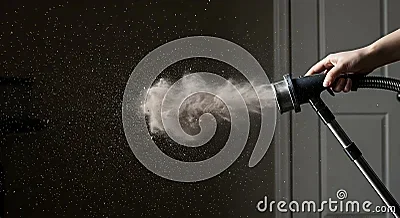
Visual guide about Vacuum blowing dust clouds
Image source: thumbs.dreamstime.com
How a Dirty Filter Spreads Allergens and Dust
Your filter is designed to trap tiny particles like pet dander, pollen, dust mites, and dirt. When the filter is clean, those particles stay trapped inside the vacuum. But when the filter is full, there’s no room for new particles to get trapped. Instead, they get blown back out of the vent and into your home’s air.
This wrecks your indoor air quality, especially if you have allergies or asthma. You might notice more sneezing, itchy eyes, or coughing after you vacuum, which is a clear sign your filter is blowing dust back into the air. For people with severe asthma, this can even trigger life-threatening attacks.
Mold and Bacteria Growth in Damp Filters
If you’ve ever vacuumed up a small spill, or if you live in a humid area, your filter might get damp. A damp filter is the perfect breeding ground for mold spores and bacteria. Over time, these grow on the trapped dirt and hair in your filter.
Every time you turn on your vacuum, it blows these mold spores and bacteria into your home’s air. This can make you and your family sick, causing symptoms like coughing, congestion, and even respiratory infections. If your vacuum smells musty or foul when you turn it on, that’s a clear sign mold is growing in your filter.
What Happens When You Never Clean a Vacuum Filter: Motor Damage and Shortened Lifespan
This is the most expensive consequence of skipping filter maintenance. Most people don’t realize that a dirty filter can permanently ruin their vacuum’s motor, leading to costly repairs or having to buy a new machine entirely.
How Restricted Airflow Overheats Your Vacuum Motor
The air flowing through your vacuum doesn’t just carry dirt—it also cools the vacuum motor while the machine is running. When your filter is clogged, air can’t flow through the vacuum. That means the motor has no cool air to keep it from overheating.
At first, your vacuum’s overheat protection will shut the machine off to prevent damage. But if you keep using a clogged filter, the motor will overheat repeatedly. Over time, this causes premature wear on the motor, and eventually, it will burn out entirely. Replacing a vacuum motor costs almost as much as buying a new vacuum, so most people just toss the old machine and buy a new one.
Why Skipping Maintenance Voids Your Manufacturer Warranty
Most major vacuum brands, including Dyson, Shark, and Bissell, require regular filter maintenance to keep your manufacturer warranty valid. If you never clean your filter, and your motor burns out, the brand will likely deny your warranty claim. They’ll say the damage was caused by user neglect, not a defect in the machine.
That means you’ll have to pay for all repair costs out of your own pocket. For a high-end vacuum, those repairs can cost $100 or more. For a cheaper vacuum, it’s usually not worth repairing, so you have to buy a new one.
The Sneaky Extra Costs of a Dirty Vacuum Filter
Even if your vacuum doesn’t break entirely, a dirty filter will cost you money in small ways that add up over time.
Higher Energy Bills From a Struggling Vacuum
A vacuum with a clogged filter has to work much harder to run. The motor has to draw more power to create even a small amount of suction. This increases your vacuum’s energy consumption, which adds extra dollars to your monthly utility costs.
It might not seem like much at first—an extra $1 or $2 a month. But over the course of a year, that adds up to $10 to $30 in unnecessary costs. Over the 5-8 year lifespan of a vacuum, that’s $50 to $240 wasted on energy bills, all because you didn’t clean your filter.
When a Dirty Filter Means You Have to Buy a New Vacuum Early
A well-maintained vacuum should last 5 to 8 years. But if you never clean your filter, you’ll likely have to replace your vacuum 2 to 3 years earlier than you should. That means you’re spending money on a new vacuum every 3-5 years instead of every 5-8 years.
If you buy a $200 vacuum every 4 years instead of every 7 years, you’ll spend an extra $200 every 7 years. Over two decades, that’s $600 wasted, all from skipping 10 minutes of monthly maintenance.
How Often Should You Clean Your Vacuum Filter? (And How to Do It Right)
The good news? All of these problems are 100% preventable. Cleaning your vacuum filter takes less than 10 minutes a month, and it can save you hundreds of dollars (and a lot of frustration) in the long run.
General Filter Cleaning Guidelines
How often you need to clean your filter depends on how often you use your vacuum, and what type of floors you have:
- If you vacuum 1-2 times a week: clean your filter every 3 months.
- If you vacuum 3-4 times a week: clean your filter every 2 months.
- If you have pets, or vacuum every day: clean your filter every month.
- If you vacuum up wet spills often: check your filter for dampness every time you use the vacuum, and let it dry completely before using it again.
Step-by-Step Filter Cleaning for Different Vacuum Types
Cleaning your filter is easy, but the exact steps depend on what type of vacuum you have. Follow these simple steps for the most common vacuum types:
- Turn off and unplug your vacuum: Never clean your filter while the vacuum is plugged in, to avoid electric shock.
- Locate your filter: Check your vacuum’s manual if you don’t know where the filter is. Most upright vacuums have the filter behind a small door on the top or back of the machine. Cordless stick vacuums usually have the filter inside the dust bin. Robot vacuums have small filters behind a door on the top or bottom of the machine.
- Remove the filter gently: Don’t pull too hard, or you might tear the filter material.
- Tap out loose dirt: Hold the filter over a trash can and tap it gently to remove loose hair and dirt. You can also use a soft brush (like a clean makeup brush) to gently brush off stuck-on debris.
- Wash the filter (if it’s washable): Rinse the filter with cold water only—don’t use soap, detergent, or fabric softener, as these can break down the filter material. Rinse until the water runs clear.
- Let the filter air dry completely: Place the filter on a clean towel in a well-ventilated area, and let it dry for 24 to 48 hours. Never put a wet filter back in your vacuum, as this can cause mold growth and motor damage.
If your filter is disposable, skip steps 5 and 6—just toss the old filter and replace it with a new one.
Washable vs. Disposable Vacuum Filters: Which Is Better?
Not sure if your filter is washable or disposable? Check your vacuum’s manual to confirm. Here’s a quick comparison to help you understand the difference:
| Feature | Washable Filters | Disposable Filters |
|---|---|---|
| Cost | One-time purchase (usually $15-$30), no recurring costs | Need to buy replacements every 3-6 months, which adds up to $20-$40 a year |
| Lifespan | Lasts 1-2 years with proper care | Needs replacement every 3-6 months, even with light use |
| Cleaning Ease | Rinse with cold water, air dry completely (takes 5 minutes of active time) | No cleaning needed, just toss the old filter and insert a new one (takes 1 minute) |
| Best For | Frequent vacuum users, people with pets, people who want to save money long-term | Infrequent vacuum users, people who hate maintenance tasks, people who don’t mind recurring costs |
| Allergy Protection | High (if it’s a HEPA washable filter, it traps 99.97% of particles as small as 0.3 microns) | High (disposable HEPA filters also trap 99.97% of small particles) |
When to Replace Your Filter Instead of Cleaning It
Even if you have a washable filter, you can’t clean it forever. You need to replace your filter if:
- The filter is torn or has rips in the material (this lets dirt escape back into your home’s air).
- The filter is discolored, even after washing it multiple times.
- The filter smells bad, even after drying completely (this is a sign of mold growth).
- You have a disposable filter that’s past its 3-6 month lifespan.
Most washable filters need to be replaced every 1-2 years, even with proper care. Disposable filters need to be replaced every 3-6 months, no matter how often you use your vacuum.
Common Mistakes People Make When Cleaning Vacuum Filters
Even if you’re cleaning your filter regularly, you might be making mistakes that ruin the filter (or your vacuum) without realizing it. Here are the most common mistakes to avoid:
Mistakes That Ruin Your Filter (and Your Vacuum)
- Putting a wet filter back in your vacuum: This is the #1 mistake people make. A wet filter grows mold fast, and the moisture can damage your vacuum’s motor. Always wait until the filter is 100% dry before putting it back.
- Using soap or detergent to clean your filter: Soap breaks down the delicate material in your filter, making it less effective at trapping dirt. Only use cold water to clean washable filters.
- Vacuuming up wet spills with a standard filter: Most vacuum filters are not designed to handle liquids. If you vacuum up a spill, the filter will get soaked, and it may be impossible to clean. Only use a wet-dry vacuum for liquid spills.
- Brushing a HEPA filter with a stiff brush: HEPA filters are made of very delicate material. Using a stiff brush can rip the material, ruining the filter’s ability to trap small particles. Use a soft brush or just tap the filter to remove dirt.
- Forgetting to clean the filter for 6+ months: Even if you don’t use your vacuum often, dust and hair can still build up in the material. Set a reminder on your phone to clean your filter regularly, so you don’t forget.
Quick Tips to Make Filter Cleaning a Habit
It’s easy to forget to clean your filter, but these simple tips will help you make it a regular part of your routine:
- Clean your filter every time you empty your vacuum’s dust bin. That way, you’ll never forget.
- Set a monthly reminder on your phone or calendar to clean your filter.
- Keep a spare filter on hand. That way, you can swap out the dirty filter for a clean one while the dirty one dries, so you don’t have to wait to use your vacuum.
- Add filter cleaning to your spring and fall deep cleaning checklists, so you remember to do it even if you let it slip for a month or two.
Conclusion
At the end of the day, what happens when you never clean a vacuum filter is way more serious than most people realize. It ruins your vacuum’s performance, puts your family’s health at risk, costs you money in repairs and energy bills, and shortens the life of your machine by years. The good news? Fixing the problem takes less than 10 minutes a month, and it can save you hundreds of dollars (and a lot of frustration) in the long run.
Grab your vacuum manual, find your filter, and give it a quick clean today. Your floors, your lungs, and your wallet will thank you.
Frequently Asked Questions
Can a dirty vacuum filter make you sick?
Yes, a dirty filter can’t trap dust, pet dander, or mold spores, so it blows these particles back into your home’s air. This can trigger allergies, asthma attacks, and even respiratory infections in sensitive people.
How do I know if my vacuum filter is too dirty to clean?
If your filter is torn, has permanent stains or bad odors even after washing, or no longer traps dirt after cleaning, it’s time to replace it. Most disposable filters also need replacement every 3-6 months regardless of condition.
Do all vacuum filters need to be cleaned?
Most reusable (washable) filters need regular cleaning, but disposable filters should never be washed. Check your vacuum’s manual to confirm if your filter is washable or disposable before attempting to clean it.
Can I use a hair dryer to dry my vacuum filter faster?
No, high heat from a hair dryer can melt or warp the filter material, ruining its ability to trap particles. Always let your filter air dry completely for 24-48 hours before putting it back in your vacuum.
Will cleaning my vacuum filter fix weak suction?
In most cases, yes—clogged filters are the #1 cause of weak vacuum suction. If cleaning the filter doesn’t fix the problem, check for clogs in the hose or brush roll next.
How much does it cost to replace a vacuum filter?
Replacement filter costs vary by brand and type, but most range from $10 to $40. Washable filters are a more cost-effective option long-term, as you only need to buy one every 1-2 years.