How to Clean Cutting Boards: Thorough Sanitizing Guide
SEO Title
:max_bytes(150000):strip_icc()/clean-wooden-cutting-board-4772583_05-6782ac2cc4784073ab3769537ed1da34.jpg)
How to Clean Cutting Boards: Wood vs Plastic Guide
Meta Title
How to Clean Cutting Boards Safely: Wood vs Plastic
Meta Description
Learn how to clean cutting boards the right way. Compare wood vs plastic, get disinfecting tips, remove stains, and control odors. Practical advice for home cooks.
URL Slug
how-to-clean-cutting-boards-wood-vs-plastic
Introduction
A clean cutting board keeps your kitchen safe and your food tasting great. Whether you use wood or plastic boards, knowing how to clean cutting boards properly matters. This guide covers disinfecting, stain removal, and long term maintenance. Follow these steps and your boards will stay hygienic and beautiful.
Main Content
Why board hygiene matters
Raw meat, fish, and eggs can leave harmful bacteria behind. Proper cleaning lowers the risk of foodborne illness. Hot water, soap, and drying help, but extra steps make a difference. A simple rinse is not enough for true disinfecting.
Wood vs plastic: what changes your routine
Wood and plastic react differently to moisture and cleaners.
- Wood: porous surface can trap bacteria if it stays wet. It needs gentle washing and quick drying. Over time, sanding and oiling reduce odors and stains.
- Plastic: non porous surface is easier to sanitize in a dishwasher or with bleach solutions. Scratches can hide germs, so replace cracked boards.
Example: A maple block board feels gentle on knives, while a HDPE plastic board is light and dishwasher friendly. Both can stay safe if you match the cleaning method to the material.
How to clean cutting boards daily
A light clean after each use keeps buildup low.
- Rinse off loose food under warm water.
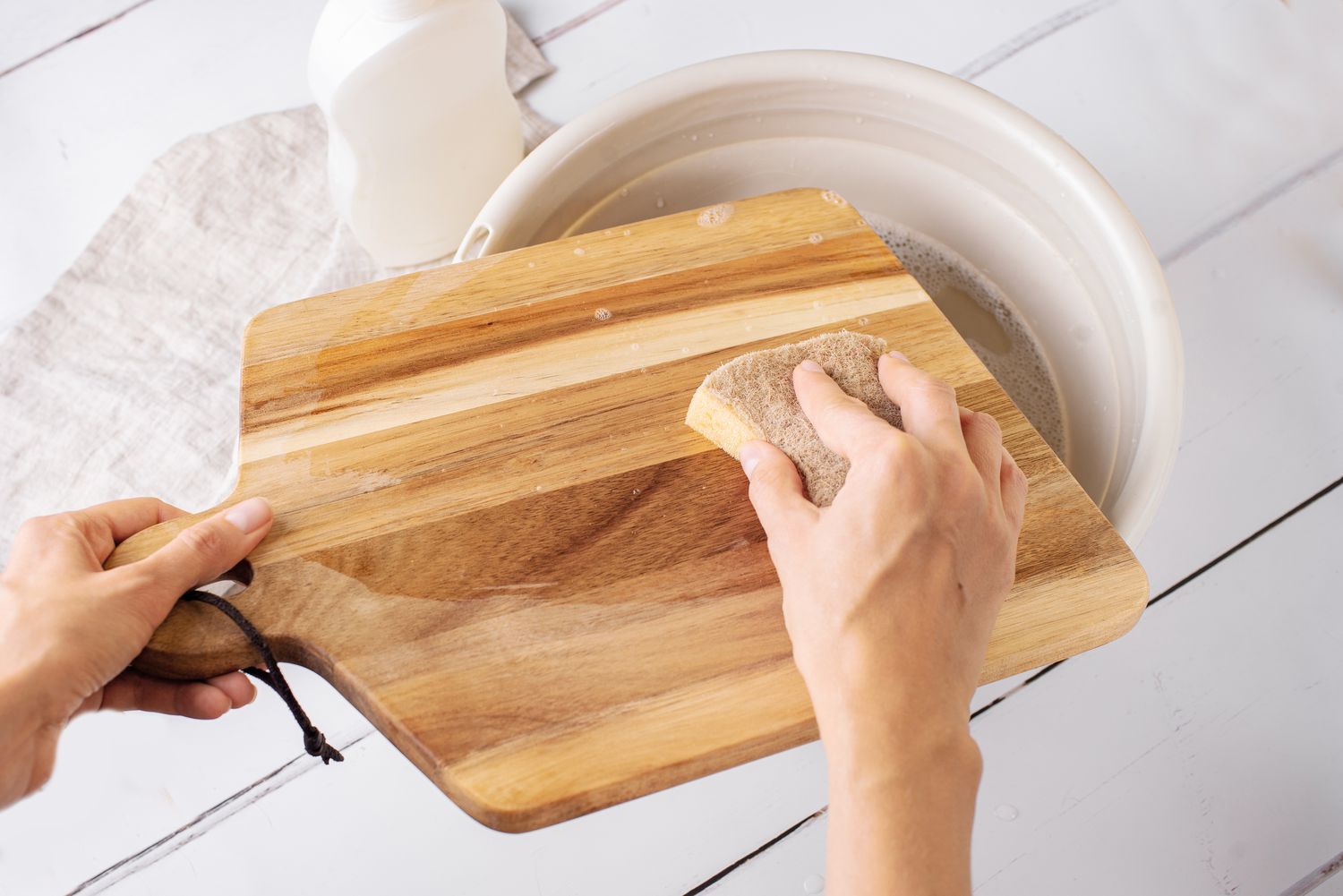
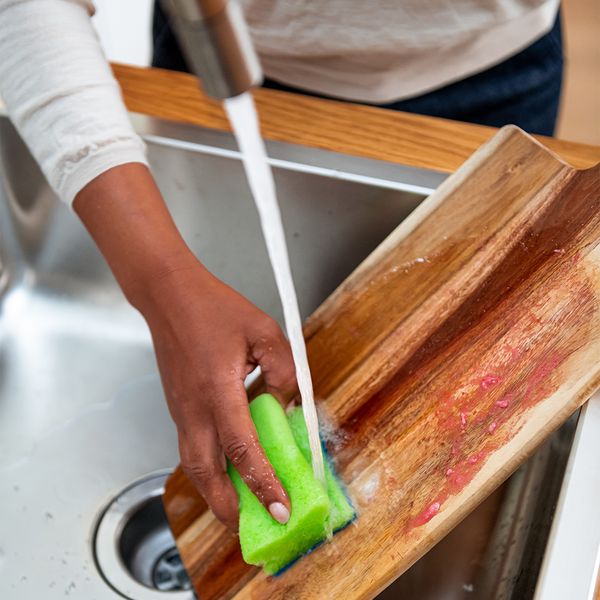
- Wash with mild dish soap and a soft sponge or brush.
- Avoid harsh scouring pads that leave deep grooves.
- Dry the board completely with the edge facing down so it drains.
If your board smells, wash it and move to odor control steps below.
Disinfecting methods that actually work
For true disinfecting, use one of these options after regular washing.
- Bleach solution: 1 tablespoon unscented bleach per gallon of cool water. Wipe the surface, let it sit for one minute, then rinse and dry.
- Hydrogen peroxide: Spray 3% hydrogen peroxide, wait a few minutes, then wipe.
- Distilled white vinegar: Spray full strength, wait several minutes, then rinse.
Plastic boards can usually handle stronger solutions, but always rinse well so food does not taste like chemicals.
Stain removal tips you can try
Coffee, turmeric, and beets often leave stubborn stains. Try these gentle methods.
- Baking soda paste: mix baking soda with a little water, rub into the stain, let sit, then rinse.
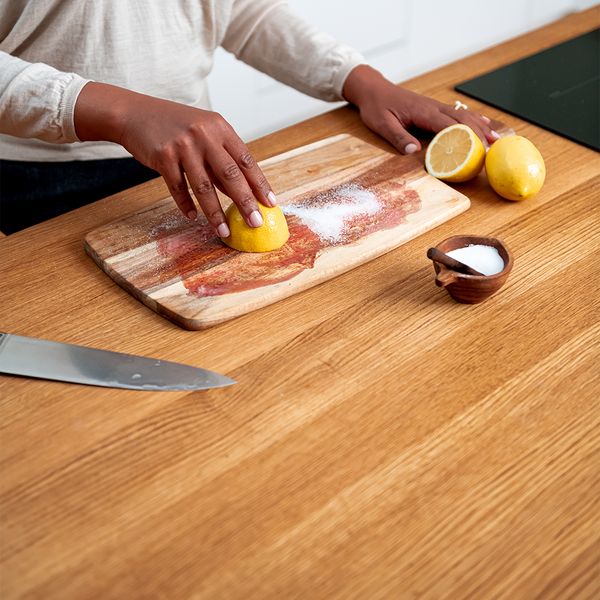
- Salt and lemon: sprinkle coarse salt, rub with a lemon half, and let the acid lift the color.
- Boiling water method: for plastic boards, carefully pour boiling water over the stained area to help loosen it.
On wood, avoid harsh scrubbing that damages the surface. Light sanding followed by oiling can reduce deep stains over time.
Simple ways to control board odors
Persistent smells mean your board needs extra care.
- Salt and lemon: as mentioned for stains, this combo also freshens smells.
- Baking soda soak: sprinkle baking soda, add a little water to form a paste, leave for 10 minutes, then rinse.
- Vinegar spray: a quick spray of vinegar, then rinse after a few minutes.
- Sunlight: place the board in indirect sunlight for a short time to dry out odor causing microbes.
Avoid soaking wood boards, which can warp them and worsen smells.
Maintenance routines that extend board life
Regular care keeps boards flat, sanitary, and attractive.
- Oil wood block boards every few weeks with food grade mineral oil or a beeswax blend.
- Inspect for cracks and deep grooves where bacteria can hide.
- Replace plastic boards when they show heavy knife marks.
- Keep boards away from prolonged direct heat and long soaks in the sink.
Example habit: after dinner, clear scraps, wash, dry, and set the board upright in a rack so it air dries.
Common mistakes to avoid
- Using the dishwasher for thin plastic boards that warp.
- Soaking wooden boards in water or letting them air dry flat.
- Using harsh bleach on unfinished or damaged wood.
- Ignoring deep cuts where germs can grow.
Fix these habits and your cleaning routine becomes safer and simpler.
Expert tips for long term safety
- Color code boards if possible: one for produce, one for cooked foods, and a separate one for raw meat.
- Keep a small brush dedicated to boards so you do not spread bacteria to other surfaces.
- Run plastic boards through the dishwasher when they are heavily soiled, but still inspect them regularly.
- Rotate multiple boards so each one dries fully between uses.
These small steps make everyday cooking cleaner and more confident.
Key Takeaways
- Daily rinsing and soap reduce most bacteria on both wood and plastic.
- Disinfect with bleach solution, hydrogen peroxide, or vinegar depending on your board type.
- Use baking soda and lemon for stains and odor control without damaging surfaces.
- Proper drying and regular oiling keep wood boards in great condition.
- Replace scratched plastic boards to avoid hidden germs.
FAQ
Q1: How often should I disinfect my cutting board?
Aim to fully disinfect at least once a week, or immediately after cutting raw meat, poultry, or fish. Daily washing with soap is still important between disinfecting sessions.
Q2: Can I put my wooden cutting board in the dishwasher?
It is not recommended. The heat and water can warp, crack, or cause the board to split. Hand wash and dry it thoroughly instead.
Q3: What is the best way to remove tough stains from a plastic board?
Try a paste of baking soda and water, or a bleach solution if the board is in good shape. For stubborn spots, boiling water carefully poured on the area can help.
Q4: How do I know when it is time to replace my cutting board?
Replace plastic boards when they have deep grooves that do not scrape clean. Replace wooden boards if they develop persistent cracks, deep stains, or warped surfaces that cannot be flattened.
Q5: Does vinegar actually kill bacteria on cutting boards?
Vinegar is effective against some microbes but less powerful than bleach. Use vinegar for light cleaning and odor control, and use bleach when you need stronger disinfecting.
Q6: Should I oil my wooden board after cleaning?
Yes. Food grade mineral oil or a beeswax oil blend protects the wood, reduces drying, and minimizes odors and stains.
Q7: Can I use the same board for raw meat and vegetables?
It is safer to use separate boards, or to disinfect thoroughly between tasks. Color coding boards is a simple way to avoid cross contamination.
Conclusion
Learning how to clean cutting boards the right way protects your food and extends the life of your kitchen tools. Compare wood vs plastic, follow disinfecting steps, remove stains gently, and control odors with simple household methods. Consistent maintenance keeps your boards safe, clean, and ready for every meal.
SEO Data
- Primary keyword: how to clean cutting boards
- Secondary keywords: wood vs plastic, disinfecting, stain removal, odor control, maintenance
- LSI keywords: board hygiene, food safety, cutting board care, kitchen hygiene, proper drying, oiling wood boards, replace cracked boards
- Readability: plain language, short sentences, active voice
- Tone: helpful, professional, practical